**
Problem**
Parents and students who look for online tutoring often land on messy websites that feel generic. It is hard to understand what subjects are covered, who the tutors are, and whether the platform is actually good or just another ad.
**
Solution**
The NafhambyTyro landing page focuses on clarity and trust. It introduces the value in a single hero, shows the full curriculum coverage, highlights top instructors, and backs everything up with real reviews. The goal is simple. Help parents and students quickly answer three questions:
- Is this for my grade and subjects
- Who will teach me
- Can I trust this platform with my time and money
**
Screens**
**
Hero section and main value**
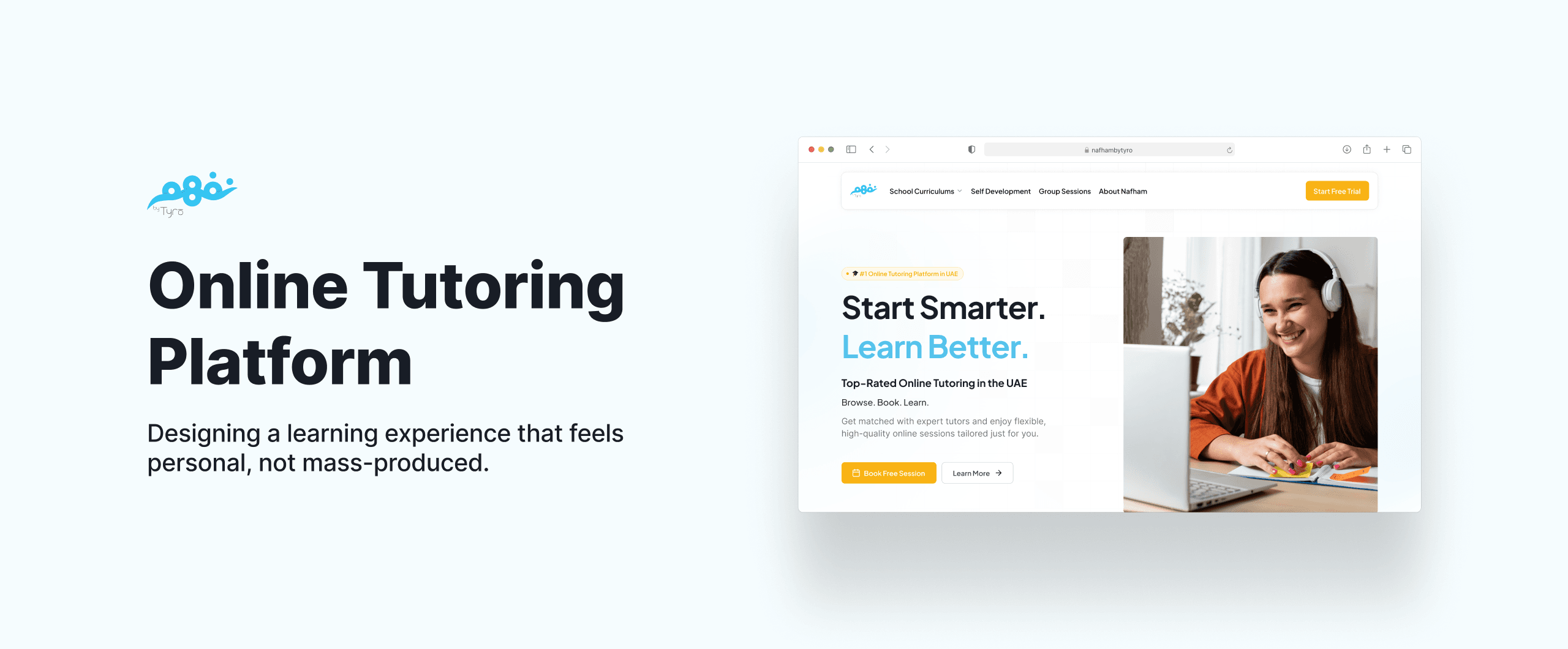
This is the first impression of the platform. The hero clearly states the promise of the product and backs it with a real student photo. The copy explains that this is a top rated tutoring platform in the UAE and the primary actions are simple. Start a free session or learn more. The navigation keeps the main product lines visible, like school curriculums and self development, without pulling focus away from the main call to action.
**
Subjects and offerings overview**
Here the landing page answers the question “What exactly do you cover”. Subjects are grouped into clear categories like languages, sciences, humanities and creative fields. Each badge works like a quick filter and also shows the depth of the curriculum. Below, supporting sections explain what the service offers in plain language. The layout keeps things light while still communicating that the platform is wide and structured.
**
Instructors and social proof**
This section is all about people. The “Top instructors” grid puts real tutors front and center with photos, ratings and experience. Below, testimonials from students and parents reinforce that these are real sessions, not a faceless platform. The cards are designed to feel friendly and trustworthy so parents feel comfortable booking a first session.
**
Tutor reviews and detailed feedback**
This component zooms in on one instructor and their rating. It collects multiple student reviews in one focused view and shows the overall score at the top. The design keeps the content dense but readable, which builds strong trust in the tutor before a parent or student commits to booking.
Design constraints
-
Communicating to parents and students at the same time The page had to speak to both parents who pay for the service and students who use it. I needed a tone that felt reassuring for parents while still feeling modern and relatable for teenagers.
-
Balancing a lot of information without overwhelming the user The platform covers many subjects, grades and tutor profiles. The challenge was to show enough depth to look serious while keeping the layout clean and easy to scan.
-
Designing trust for an education product Ratings, reviews and tutor details are critical. I had to find a way to show social proof without turning the page into a wall of text. That is why I used focused components for testimonials and a dedicated tutor review popup.
-
Keeping a consistent visual language across different sections The hero, subjects, instructors and testimonials all have different content types. I spent time aligning spacing, card styles and typography so the page feels like one product, not four separate blocks.
-
Optimising for clear primary actions With so many benefits to highlight, it was easy to end up with too many buttons. A key challenge was deciding which actions matter most and keeping “Book free session” and “Start free trial” as the main focus.
Outcome
This landing page turned Nafham by Tyro into a platform that feels clear and trustworthy from the first scroll. The content answers the key questions fast. What subjects are covered, who the tutors are, and why people trust them. The mix of real instructors, ratings and testimonials gives parents and students confidence that they are looking at a serious tutoring product, not just another generic education site.
What I would do next
If this was live, my next step would be to track how users move through the page. I would focus on scroll depth, hero call to action clicks and how many visitors open tutor profiles or testimonials before booking. Based on that, I would refine the hierarchy of sections, test different hero messages and experiment with more targeted entry points, for example landing variants by grade or subject. I would also explore how this layout translates to mobile first usage, since most parents and students will probably discover the platform on their phones.